Mega-List: 250+ Astonishing London Facts From Bizarre To Beautiful
Curious about London? Me too! And even though I live here, I’m always finding out new and interesting facts about London.
Here’s my massive list of fun London facts, interesting London facts, and facts about London for kids. I’ve also included facts on all the popular London landmarks, big events throughout history, and some morbid and macabre facts (for you dark tourists).
So if you’re as obsessed with this amazing city as I am, read on. Here are my favorite London facts for everything you’re most curious about.
Jump to London Facts About:
Facts About London Geography, Population & Topography
Interested in the layout of London, why it is the way it is, and why certain people live in certain places? Here are the most interesting London facts about the city’s structure.

- London is actually two cities. The City of London – within the borders of old Roman London – is technically a city within a city, having its own mayor and independent governance separate from the wider London.
- London is the smallest city in the UK! The City of London, that is. Nicknamed “The Square Mile,” it’s pretty small, with a residential population of only 7,500 people! Though many, many people work in this area so it’s still bustling during business hours.
- Inner London covers a total area of 607 square miles (1,572 sq km). That’s a little over half the size of Rhode Island for inner London alone!
- The London Metropolitan Region – sometimes called “Greater London”- contains 3,236 square miles (8,382 sq km). That’s larger than the entire state of Delaware!
- The Greater London region is home to almost 9 million people. The New York City region, by comparison, has only 8.4 million.
- London is a “polycentric” city, meaning there are many core districts and no clear hierarchy among them. Once you start walking around the winding streets, you’ll understand how intricate the layout is.
- Beneath London’s streets, there are hidden rivers that used to flow above ground. The River Fleet, for example, is now completely underground and flows into the Thames. You can peep at the Fleet through a grate in front of the Coach Pub off Farringdon Road.
- London is one of the greenest cities in the world, with around 40% of its surface area covered by parks, gardens, and natural spaces. It actually qualifies as a forest by the UK definition! By comparison, a little over 20% of New York City is green space.
- Greenwich, a borough in London, is home to the Prime Meridian. This is the reference line for Greenwich Mean Time (GMT) and is where East meets West at Longitude 0°. If you straddle this line in Greenwich, you can be in two hemispheres at once.
- After Paris, London is the world’s second most visited city by tourists, with more than 30 million visitors per year. No wonder it’s always so crowded.
- The social divide between East and West London began long ago. Since the Thames flows eastwards, all the detritus dumped in the river (human waste, carcasses, trash) collected in East London, and was therefore thought of as a dirty and poor place to live. East London still lives with this stigma today, though it’s not accurate.
- East London was more targeted and suffered more destruction and death than the West End during the Blitz and other German bombings. The East End was the center of trade and manufacturing, which the Germans attempted to destroy.
- London used to have 7 city gates: Ludgate, Newgate, Cripplegate, Bishopsgate, Aldgate and Aldersgate. The streets where they used to be still bear some of the names of the gates that once stood there.
Interesting London Facts: Climate & Weather
London lives with the reputation of being terribly rainy. But it’s actually not that bad! Here’s some interesting facts about London’s weather and climate.
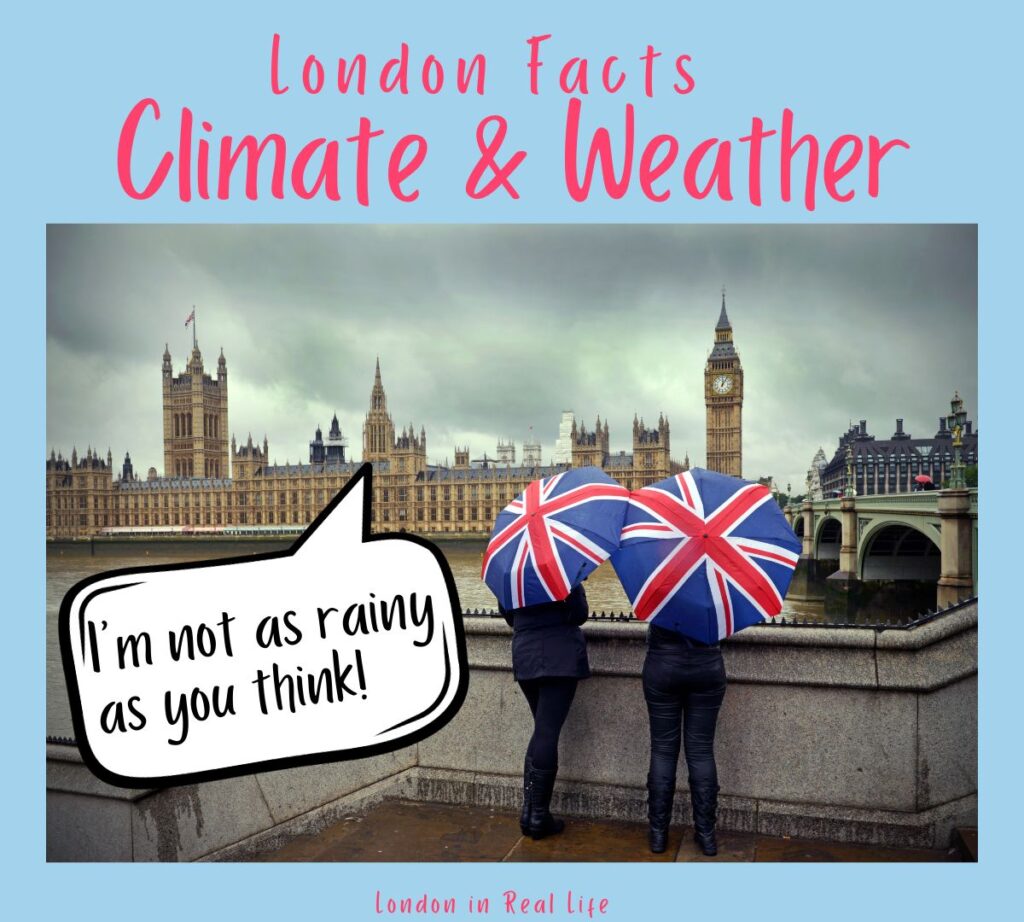
- London isn’t as rainy as you think. It only totals about 23 inches per year, which is far less than rainier places like Seattle, with 39 inches per year.
- It does snow sometimes! You can expect it to snow about once per year, but it rarely sticks.
- Summers have gotten hotter, with temperatures sometimes reaching 80-85F. And basically nowhere has AC. London homes were built to retain heat, so hot summer days can be pretty miserable.
- London gets less annual sunshine hours compared to other UK regions.
- It used to be a lot foggier! Err…smoggier. The Great Smog of 1952 blacked out most of the city in a thick haze. It was mostly coal dust and pollution.
- London is an Urban Heat Island! The city center is warmer than surrounding areas.
- The UK is an island, so storms can blow in hard and fast just like in tropical islands.
- The winter of 1962-63 was brutally cold and snowy. Snow drifts topped 8 feet in some areas, the most ever on record. London was ground to a halt as (if there was a tube strike).
Facts About London for Kids
Traveling to London with family? Here’s some fun London facts to get them excited and interested about coming to this incredible city.

- London is actually two cities in one (London and the City of London), and the UK is actually 4 countries in one (England, Wales, Scotland, and Northern Ireland).
- The London Eye is Europe’s tallest Ferris wheel, and from the top, you can see up to 40 km (25 miles) in all directions.
- The Tower of London once had a “Royal Menagerie” of exotic animals, including polar bears and tigers! They used to chain the polar bear to the banks of the Thames and let it catch fish.
- The Thames River has over 200 bridges and 20 tunnels crossing it.
- Platform 9 ¾ at King’s Cross Station, famous from the Harry Potter books, has a trolley half-embedded in the wall where you can take fun photos.
- Big Ben is not the clock, but the name of the largest bell inside the famous clock tower.
- The British Museum is said to be haunted by the ghosts of the Egyptian mummies housed there.
- London’s smallest statue is two mice eating cheese, found on Philpot Lane.
- The Great Fire of London in 1666 started in a bakery on Pudding Lane. All the nearby streets once had food names, too!
- There’s a Dinosaur Park in Crystal Palace Park with sculptures of dinosaurs, made over 160 years ago.
- The Science Museum has a hands-on gallery where you can explore and experiment with science.
- London has a hidden underground railway – the Mail Rail – that was used to transport mail across the city.
- The Shard is the tallest building in the UK, and it’s shaped like a shard of glass. Some other tall buildings in London have nicknames of “The Cheese Grater,” “The Gherkin” and “the Walkie Talkie.” Can you spot them?
- The London Underground is home to its own unique species of mosquito! The rats and mice that live in the underground have also genetically adapted to their environment.
- The King’s official residence, Buckingham Palace, has 775 rooms, including 78 bathrooms! That’s a lot of toilets to clean.
- London hosted the Olympic Games three times: in 1908, 1948, and 2012. You can visit the massive park where to last games took place.
- In Greenwich you can stand in two hemispheres at once if you straddle the Prime Meridian.
- To get to the top of The Monument to the Great Fire of London you have to climb 311 steps!
- In the Old Operating Theatre Museum, you can see an original operating theater and some of the oldest and craziest surgical tools in the world!
- London buses weren’t always red. Before 1907, each bus route had its own color.
- The London Underground logo is called a “roundel”, and the signature print on all the underground seats is called a “moquette.” Each tube line has its own signature colors and fabrics.
- There’s a secret nose on the Admiralty Arch – it’s said to be a spare for the statue of Admiral Nelson in Trafalgar Square!
- The London Underground has 270 functioning stations, but there are also about 40 abandoned or ghost stations. They now use some of them to film movies and tv shows. One is even used as an underground farm, and you can the lettuce they grow there.
- Peppa Pig was inspired by a volunteer at Hackney City Farm, where she cared for a pig named Peppa. You can go visit the same family of pigs today!
- When the Thames would freeze over long ago, you could pay to ride a pet elephant across it.
- At the London Transport Museum, you can drive a simulated tube train like a real Underground driver.
- The smallest police station in the world is in Trafalgar Square – it’s just big enough for one police officer.
- There’s a time capsule buried under the Cleopatra’s Needle monument on the Embankment – it contains a set of 12 photographs of the best-looking women of the day and some hairpins, among other strange objects!
- The pelicans in St. James’s Park were a gift from Russia and have been there since 1664.
- You can find a statue of a dragon marking the boundaries of the City of London, and the bollards that mark the city boundaries also have the dragon logo.
- There’s a Victorian pet cemetery in Hyde Park with tiny gravestones.
- East London has a light tree made of over 75 sets of traffic lights – but it’s actually a piece of art, not a functional traffic signal. It would probably cause a lot of car crashes if it were a real traffic signal!
- The Monument to the Great Fire of London is 61 meters tall, exactly the distance from its base to the site where the Great Fire started.
- There’s a Roman amphitheater hidden beneath the Guildhall Art Gallery.
- Harrods, the famous department store, once sold exotic animals and in 1967 sold a lion cub.
- The British Library has a copy of every book published in the UK – that’s over 170 million items!
- In the past, the River Thames used to freeze over completely, and they held Frost Fairs on the ice with games, stalls, and even elephant rides.
- The original London Bridge (“Old London Bridge”) was more than just a bridge, and it didn’t fall down like in the nursery rhyme. It had shops and homes piled high on both sides of the traffic lane. It burned down in the 1300s but was later rebuilt.
- “Old London Bridge” was replaced with “New London Bridge,” but that bridge only lasted a little over 100 years before it was dismantled….and moved all the way to Arizona in the United States!
- Temple Bar near St. Paul’s cathedral was once a lawn ornament for a rich heiress. She kept it in her front yard, even though it’s way bigger and taller than most London houses!
Cool Facts About London Landmarks
Going out and about in London to see the sights? Read up on these fun London facts about all the popular landmarks first!
Facts About Buckingham Palace
- Buckingham Palace is not the first or only Royal residence in London. Prior to Queen Victoria, royal families lived variously at St. James’s Palace, Whitehall, Westminster, and Hampton Court Palace.
- The garden at Buckingham Palace is the largest private garden in London.
- Buckingham Palace has been the official home of the UK’s sovereigns since 1837, when Queen Victoria moved in.
- Contains 775 rooms, including 19 State rooms.
- Buckingham palace was bombed 7 times during World War II.
- Buckingham Palace is only open to visitors when the King is not in residence (summer and select times throughout the year, when the King goes to Balmoral and other family homes).
- King Charles was born in the palace, as well as several other royal births.
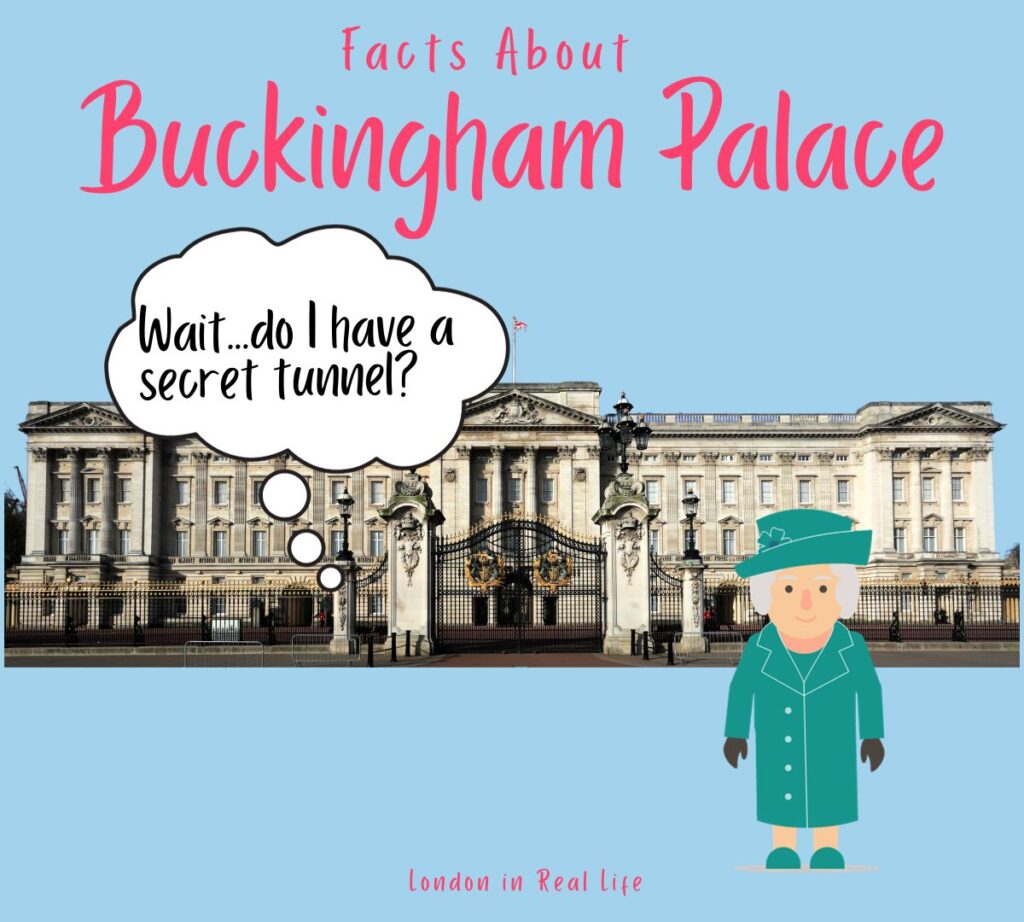
- Buckingham palace is rumored to have a tunnel to the Houses of Parliament!
- Buckingham Palace has its own private post office among its 775 rooms.
- The palace contains an indoor swimming pool, a cinema, and a tennis court.
- There’s a staff of around 800 people, including a clockmaker to wind up the 350 clocks.
- The palace’s garden hosts an annual garden party for 30,000 guests.
- During World War II, the palace chapel was destroyed and later rebuilt as a ballroom.
- It has its own ATM in the basement, provided by Coutts, one of the UK’s most exclusive banks.
- The Royal Family’s past and present pets, including corgis and horses, have their own luxurious living quarters.
- The Ballroom is the largest room in Buckingham Palace, used for state banquets and ceremonies.
Interesting Facts About the London Eye

- The London Eye was officially opened on December 31, 1999.
- It stands 135 meters tall, making it one of the world’s tallest observation wheels.
- Each rotation takes about 30 minutes, offering panoramic views of the city.
- The wheel has 32 sealed and air-conditioned capsules, representing London’s 32 boroughs.
- On a clear day, you can see up to 40 kilometers in all directions.
- Over 3.5 million people visit the London Eye annually.
- It was originally intended as a temporary attraction, but its popularity made it permanent.
- The Eye was erected in 1999 as part of London’s millennium celebrations.
- At night, the London Eye is lit up with seasonal colors.
- It offers a special capsule for private dining experiences and special occasions.
- It’s a popular spot for proposals and even small wedding ceremonies.
Cool Facts About Big Ben

- It’s not actually called Big Ben! Big Ben is the nickname for the Great Bell of the clock at the north end of the Palace of Westminster.
- The tower was completed in 1859 and the clock started on 31 May that year.
- The official name of the tower housing Big Ben was renamed the Elizabeth Tower in 2012.
- The clock tower stands 96 meters (315 feet) tall.
- Each dial on the clock face is seven meters in diameter.
- Big Ben’s chimes are known worldwide and are broadcasted by the BBC.
- The clock’s accuracy is maintained with old pre-decimal pennies.
- The tower leans slightly to the northwest, about 230 millimeters over its base.
- The bell weighs 13.5 tons and was the largest in the UK when cast in 1858.
- Big Ben went silent in 2017 for four years due to renovation works.
- In 1945, a flock of birds flew into the clock and set the time back by 5 minutes!
Facts About the Houses of Parliament
It’s officially called the Palace of Westminster, but colloquially this building is just called Parliament or the Houses of Parliament. Here’s some cool facts about this massive structure.
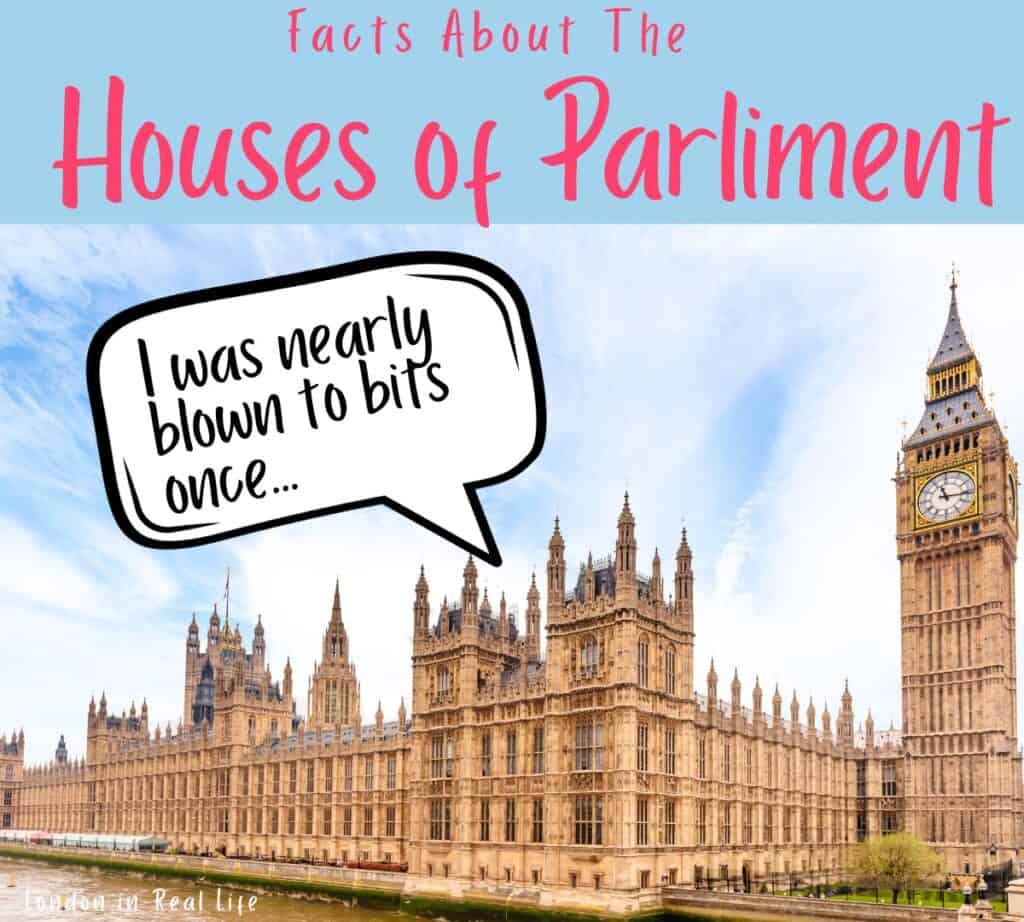
- The Houses of Parliament, officially known as the Palace of Westminster, is the seat of the UK’s two parliamentary houses.
- Originally a royal palace, it became the home of Parliament in the 16th century.
- The current Gothic Revival building was reconstructed between 1840 and 1876 after a fire.
- The Palace includes over 1,100 rooms, 100 staircases, and 3 miles of corridors.
- There are separate entrances for everyone who enters.
- The “Robing Room” is inspired by and decorated with the legends of King Arthur.
- The House of Commons and the House of Lords meet in separate chambers inside.
- Members of Parliament are not allowed to have their hands in their pockets, wear hats, or eat or drink inside.
- The Elizabeth Tower, housing Big Ben, is part of this vast complex.
- Public debates in both Houses can be attended by visitors.
- UNESCO designated the Palace of Westminster a World Heritage Site in 1987.
- The palace’s iconic facade stretches over 266 meters along the Thames River.
- The Central Lobby is at the heart of the building, beneath the famous octagonal ceiling.
- It was nearly blown to bits in the infamous Gunpowder Plot, when Guy Fawkes and his co-conspirators snuck barrels of gunpowder into the undercrofts beneath the House of Lords.
Facts About Tower Bridge
Not to be confused with London Bridge, which is just a boring cement structure.

- Tower Bridge was officially opened in 1894 and is a combined bascule and suspension bridge.
- It crosses the River Thames close to the Tower of London, hence its name.
- The bridge is 244 meters (800 feet) in length with two towers each standing 65 meters high.
- The central span of the bridge can be raised to allow ships to pass through.
- It takes about 1 minute and 20 seconds for the bridge to rise completely.
- The bridge’s Victorian Gothic style was designed to harmonize with the nearby Tower of London.
- There are permanent exhibitions inside the bridge’s towers, walkways, and Victorian engine rooms.
- The glass floor on the walkways was added in 2014, allowing visitors to view the bridge lift from above.
- Tower Bridge is often mistakenly referred to as London Bridge, which is actually the next bridge upstream and isn’t nearly as interesting looking!
- In 1952 as a bus was crossing, the bridge started to rise. The driver quickly accelerated and jumped the gap, avoiding a major catastrophe!
- If there are construction works on Tower Bridge – or any London bridge – ancient law states that a bale of hay must be hung from the center to warn passing ships.
Crazy Facts About Westminster Abbey
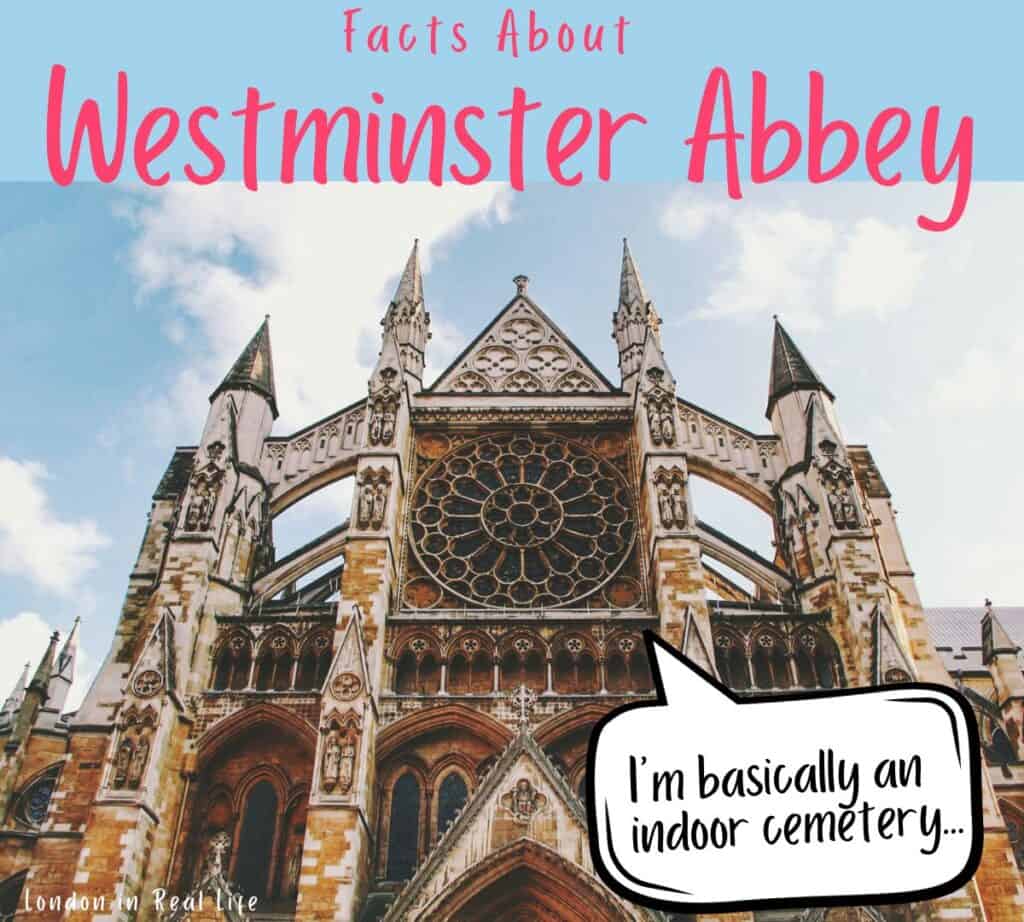
- Westminster Abbey was originally built by Edward the Confessor in the 1040s and was consecrated in 1065. But before that, it was a monastery. This site is pretty old!
- It is the traditional place of coronation and burial site for English, and later British, monarchs.
- The Abbey has hosted 16 royal weddings, including Queen Elizabeth II’s in 1947.
- Over 3,300 people are buried or commemorated at Westminster Abbey, including 17 monarchs, and it’s thought to be very haunted.
- It’s full of royal burials: 13 kings, 4 queens regnant, and 11 queens consort are buried there.
- Famous figures such as Isaac Newton, Charles Darwin, and Stephen Hawking are buried there.
- The Abbey’s Poets’ Corner commemorates over 100 poets and writers, like Shakespeare and Dickens.
- Dickens is buried there against his will. He wanted to be buried near his family home in Kent.
- It is a Gothic architectural masterpiece and has the highest Gothic nave in England, at over 31 meters.
- The Abbey’s floor is made of rare medieval tiles, some dating back to the 13th century.
- The Coronation Chair, used in every coronation since 1308, is housed in the Abbey.
- Westminster Abbey is not a cathedral or a parish church but a “Royal Peculiar” under the direct jurisdiction of the monarch.
- The pavement in front of the altar might predict the future. Apparently, the world will last for 19,683 years.
- It has the oldest door in the country, which is an original from 1050.
- There’s actually a Hockney inside the Abbey! The Queen’s Window was installed in 2018 to commemorate the reign of Elizabeth II.
Crazy Facts About the Tower of London
So much London history happened right here at the Tower. Here are my favorite Tower of London facts.
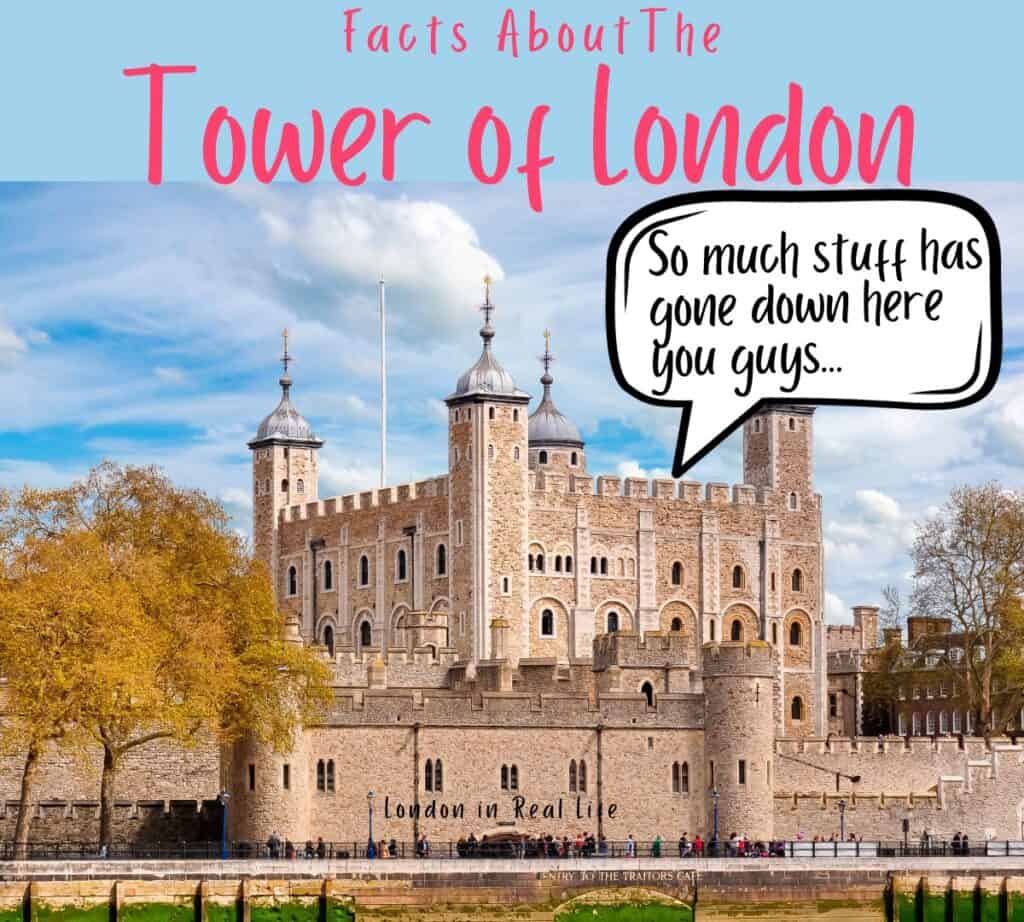
- The Tower of London was founded by William the Conqueror in 1066.
- It has served variously as a royal palace, prison, armory, and even a zoo.
- The Tower is home to the Crown Jewels, including some of the world’s most famous diamonds.
- 6 ravens are required to live at the Tower, plus a 7th as a spare. Legend says that if the six resident ravens ever leave the Tower, the kingdom will fall.
- It’s said to be one of the most haunted buildings in England, with many ghost stories, including sightings of a headless Anne Boleyn.
- The Tower was once a luxurious royal residence before becoming a dreaded prison.
- Famous prisoners include Anne Boleyn, Guy Fawkes, Sir Walter Raleigh, and the Kray twins.
- Yeoman Warders, known as ‘Beefeaters’, serve as guardians and tour guides.
- The last execution at the Tower was in 1941 – Josef Jakobs, a German spy.
- Over the centuries, a menagerie of animals was kept at the Tower, including lions, elephants, and even a polar bear.
- The White Tower, built by William the Conqueror, is 27 meters (90 feet) high.
- During the Tudor period, the Tower was used to store and test royal armor and weaponry.
- The Tower’s walls are 15 feet thick in places, making it a formidable fortress, and it used to have a water-filled moat.
- It has a total of 21 towers, the most famous being the Bloody Tower and the Traitors’ Gate.
- The Tower has its own chapel, St. Peter ad Vincula, where Anne Boleyn is buried.
- The Tower was used as a Royal Mint from the 13th century until 1810.
- The Ceremony of the Keys has been performed nightly for over 700 years, locking up the Tower. You can score tickets when they’re released once per month.
- The Tower housed exotic animals gifted to monarchs over centuries, leading to the creation of the London Zoo.
- In the 13th century, King Henry III turned the Tower into a luxurious palace, complete with gardens.
- The Tower’s “Constable’s Dues” tradition allows naval ships to enter the Tower’s port but requires them to present a barrel of rum as payment.
- The Tower’s defenses have failed only once, during the Peasants’ Revolt of 1381, when rebels ran in through the open gates!
- In 1674, two children’s skeletons were unearthed in the Tower. They are two princes who mysteriously went missing and were murdered. They have yet to be DNA tested, as the King needs to grant permission.
- The guards are technically called Yeoman Warders, but they are more commonly known as Beefeaters. King Henry VII’s royal guards were the first to be coined “Beefeaters,” as they could eat as much beef as they wanted – a rare privilege at that time.
- Many of the Tower’s executions took place on Tower Hill nearby, and not within the walls of the Tower. There is a memorial atop the hill you can see today.
- The Tower of London has its own pub, only for staff and residents.
- Yes, people actually live in the Tower! You can follow them on TikTok and see what it’s like to live inside.
Amazing Facts About the Thames
It wasn’t always the (semi) clean-flowing river you see running through London today. The Thames is full of crazy history!
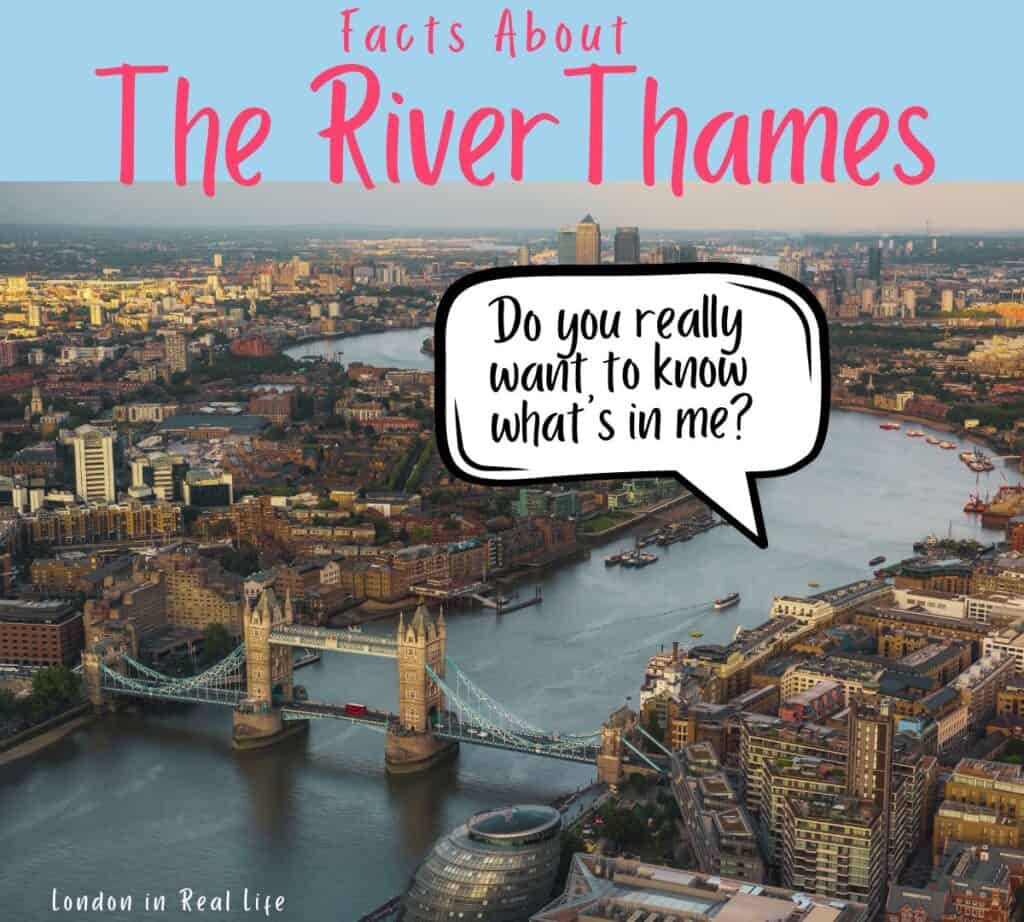
- The iconic River Thames is not just London’s primary waterway, but it’s also one of the longest rivers in England, stretching about 215 miles
- One of the largest movable flood barriers in the world, the Thames Barrier, protects London from flooding. It’s a remarkable piece of engineering located downstream of central London.
- London sits in a geographical area known as the London Basin. It’s a bowl-shaped area filled with clay, sand, and gravel, which were deposited during the last Ice Age.
- The Thames has over 80 islands, including Eel Pie Island, known for its bohemian artist community and was featured in Ted Lasso.
- The river is home to over 100 species of fish and supports a variety of wildlife.
- Eels were once plentiful in the Thames, and became an affordable food source for the lower classes. You can still eat jellied eels in some London restaurants!
- “Swan Upping” is an annual ceremonial count of swans on the Thames, dating back to the 12th century.
- The Great Stink of 1858 made the whole of London’s air unbreathable. Human waste and animal carcasses were historically dumped in the Thames, and the hot summer of that year exacerbated the smell.
- The Thames was once biologically dead, but environmental efforts since the 1950s have revived it.
- The river once had its own police force to tackle looting and theft from maritime traders. Today it is patrolled by 5 separate police forces in their respective jurisdictions.
- There is evidence of human habitation near the Thames stretching back to Neolithic times.
- It’s actually illegal to swim in parts of the Thames because it’s too dangerous.
- In 1989, 51 people died in the Marchioness disaster when a riverboat collided with a dredger.
- Britain’s worst waterway disaster occurred in 1878, when the steamship the Princess Alice sank. Over 600 people drowned in the sticky, sickly sewage of the Thames.
- The Romans founded Londinium around 50 AD, using the Thames as a transportation route and trade link. London is where it is today because of this iconic river.
- During medieval times, the Thames was London’s main highway, bustling with ships from around the world.
- In the 16th and 17th centuries, explorers like Sir Francis Drake and Sir Walter Raleigh set sail from the Thames. The Mayflower also set sail from here.
- The Thames Docklands, developed in the 18th century, became one of the world’s busiest docks during the Industrial Revolution. Today you can relive that incredible era at the Museum of London Docklands, which is free!
- Exotic goods like tea, spices, silk, and tobacco were imported via the Thames, making London a luxury goods hub.
- The Legal Quays, established in 1559, were areas along the Thames where goods were inspected and customs collected.
- The Great Fire of London in 1666 spread rapidly due to flammable materials in warehouses along the river. Imagine the explosions!
- Frost Fairs were held on the Thames when it froze over, several times between the 17th and 19th centuries.
- Completed in 1843, the Thames Tunnel was the world’s first underwater tunnel, used initially for trade and foot traffic.
- You can walk under the Thames in the Greenwich Foot Tunnel, if you dare. It’s said to be haunted by those who have died in the river.
Facts About London’s Roman History
London’s history stretches back thousands of years, but the city as we know it today began with the Romans. Let’s look at some Roman facts about London.

- Londinium, Roman London, was founded around 43 AD shortly after the Roman invasion of Britain.
- A massive wall surrounded the city, the remains of which you can still see today in many places.
- By the 2nd Century, Roman Londinium is thought to have had a population of over 60,000 people, which is massive for that era.
- The Romans constructed a bridge over the Thames, the first known fixed river crossing at this location.
- Londinium quickly grew into a significant commercial center, trading with the Roman Empire.
- Boudica, a Celtic queen, led a revolt and razed Londinium to the ground in 60-61 AD. You go girl!
- The city was rebuilt by the Romans and flourished, featuring a basilica, forum, and amphitheater, some of which you can see the remains of today.
- Roman Londinium had a diverse population, including merchants, soldiers, and people from across the empire. It was just as diverse as the London of today.
- The city had piped water, bathhouses, an ancient version of townhomes, massive marketplaces, entertainment venues, restaurants, and more.
- The city’s defensive wall, built in the late 2nd century, formed the basis of the later medieval London Wall.
- Rome wasn’t the only city to have bloody gladiator battles inside their coliseum. London had them, too! You can see the remains of the coliseum under Guildhall today.
- Roman rule lasted until about 410 AD, after which Londinium’s importance declined.
- Archaeological finds, like the Temple of Mithras, reveal insights into Roman life. The reconstructed Temple of Mithras is displayed at the Bloomberg Space.
- Roman roads, like Watling Street, connected Londinium to the rest of Roman Britain. You can still walk Watling street today!
- Remnants of the Roman defensive wall are visible at Tower Hill and near the Museum of London.
- The outline of the Roman Amphitheatre is beneath Guildhall Art Gallery, visible in Guildhall Yard.
- Hidden beneath office buildings on Lower Thames Street, remains of Roman baths are occasionally open to the public.
- The Museum of London houses numerous Roman artifacts and parts of the original London Wall.
- All Hallows by the Tower, London’s oldest church, has a Roman pavement in its crypt.
- Near the Tower of London, Billingsgate Roman House and Baths reveal a well-preserved Roman house and bath complex.
- Parts of the Roman fort’s gatehouse can be seen at Noble Street, near the Museum of London.
- A fragment of Roman pavement is viewable from the basement of a barber’s shop in Leadenhall Market.
Morbid & Macabre Facts About London
I want to know all the morbid and macabre London facts! It’s my strange obsession.
I can’t possibly get through 2,000+ years of London’s dark history in one post, but here’s my favorite spooky, creepy and bloody London facts.
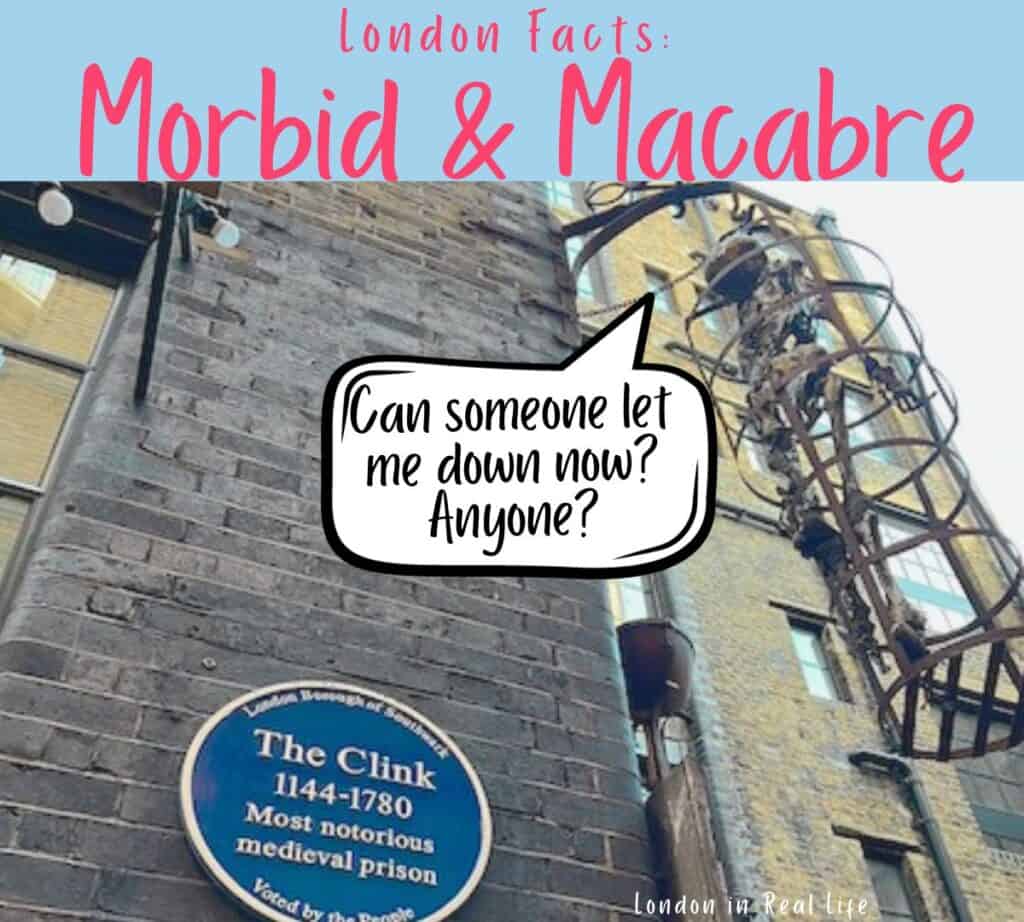
See my full map of London’s bloody and brutal historic locations you can see today here.
- When you step into a churchyard in London, you often go up a few steps higher than the pavement. That’s because London’s graveyards became so overcrowded that bodies were piled on top of bodies, literally raising the ground level.
- The smell of the cemeteries outside churches was so horrid that often women were excused from attending church because of their “delicate sensibilities”.
- The graveyard overcrowding caused a new railway and cemetery to be built. The Necropolis Railway was exclusively to carry bodies and mourners to a newly built cemetery outside the city. The overcrowding also caused the establishment of the “Magnificent Seven” cemeteries of London.
- In the 17th century, London lost one-fifth of its population in the Great Plague.
- In WWII, the Blitz and other German bombings killed more than 30,000 London residents and destroyed huge parts of the city.
- Temple Bar, now located next to St. Paul’s Cathedral, used to be a gate to the City of London, and often featured rotting heads of traitors impaled on top to warn against crossing the King.
- One of the most notorious plague pits is directly underneath Aldgate station, where more than 1,000 bodies are buried. All bodies unearthed during construction works were found to carry the pathogen for the black death (bubonic plague).
- 173 people were crushed to death, including 62 children, in Bethnal Green tube station during an air raid in WWII.
- The Moorgate Tube disaster killed 43 people in the 1970s when a tube driver failed to stop. The rescue and recovery conditions reached over 49 degrees C (120F) on the platform since air circulation in that section of the tube network was caused by trains moving through the tunnels. London has since installed air circulation systems underground.
- London experienced several deadly outbreaks of the Bubonic Plague; the 1665 outbreak killed about 100,000 people.
- Body snatchers, or “burkers” or “Resurrection Men,” stole corpses from London graves (and sometimes killed live victims) in the 18th and 19th centuries to sell for medical dissection.
- Jack the Ripper, the infamous unidentified serial killer, terrorized the Whitechapel district in 1888. The murders are still unsolved, and it’s one of the world’s most famous cold cases. You can still visit the murder sites today.
- There was another serial killer hunting London in 1888, but it got little news coverage because of Jack the Ripper. The Whitehall Mystery (aka the Thames Torso Murders) began when a woman’s torso was found in the construction site of the new Scotland Yard building.
- Highgate Cemetery, known for its Gothic tombs, is rumored to be one of London’s most haunted spots.
- The London Dungeon, now a tourist attraction, recounts the city’s gruesome history, including the Great Plague and Jack the Ripper.
- During the 19th century, London’s air pollution, known as ‘pea-soupers’, caused numerous deaths from respiratory problems.
- The Cross Bones Graveyard in Southwark was an unconsecrated burial ground for sex workers, known as “Winchester Geese,” in medieval London.
- The Bethlem Royal Hospital, originally near Bishopsgate, was notorious for its harsh treatment of the mentally ill in the 18th century. It was nicknamed “Bedlam.” You can still visit Bedlam today – it’s now the Imperial War Museum.
- The Great Stink of 1858 was caused by the overflow of untreated sewage into the Thames, leading to disease and death.
- London is full of plague pits, and you can walk right on top of them. The most infamous is Charterhouse Square near Smithfield Market.
- Some of the dirtiest jobs in Victorian London included “pure-finding” (collecting dog poo to sell), leech collecting, rat catching, sewer scavenging and bone collecting.
- The Clink Prison Museum, on the site of the notorious Clink Prison, showcases London’s penal history with torture devices, and it contains a piece of the original wall of this ancient prison.
- Ratcliffe Highway murders in 1811 were some of London’s most horrific, where two families were brutally killed, causing mass hysteria.
- Some of the poshest neighborhoods in London today used to be poverty-stricken slums, where police wouldn’t dare enter unless they were in a pair. This includes places like Westminster, Kensington, and Notting Hill!
- The Tyburn Tree was a place of execution, where an estimated 50,000 people were hanged over several centuries.
- The 1952 Great Smog of London caused an estimated 12,000 deaths due to air pollution.
- In Victorian London, “memento mori” photography, featuring images of the dead, was a popular way to remember loved ones. You can sometimes find these in antique stores today.
- The London Beer Flood in 1814, where a large vat of beer ruptured, resulted in at least eight deaths due to drowning and building collapse.
- Ghostly sightings and paranormal activities are often reported at the Old Queen’s Head, a historic pub in Islington.
- Newgate Prison, operational from the 12th century to 1902, witnessed countless executions and was known for its dreadful conditions. You can still touch part of the original wall of Newgate today. The vermin and insect populations were so horrific that it’s said your shoes crunched as you walked.
- The Broad Street Cholera Outbreak in 1854 claimed over 600 lives and led to fundamental changes in the city’s sanitation and public health systems. You can see the water pump today in Soho outside the John Snow Pub, named for the man who investigated the outbreak.
- London’s infamous Kray Twins, Ronnie and Reggie, were notorious gangsters in the 1950s and 1960s, involved in murder, armed robbery, and arson. Bethnal Green was their stomping ground, and you can go on free Kray walking tour today.
- The Massacre of St. Bartholomew’s Day in 1661 saw the execution of numerous prisoners within the Tower of London.
- The Tyburn Gallows, also known as the Tyburn Tree, was London’s primary site for public executions from the 12th to the 18th century.
- The Cato Street Conspiracy in 1820, a plot to murder all the British cabinet ministers, led to the execution of five conspirators.
- The Siege of Sidney Street in 1911 saw a gunfight in the East End between the police and Latvian revolutionaries.
- The infamous Enfield Poltergeist, a case of supposed supernatural activity in the 1970s, remains one of London’s most mysterious events.
- The Bethnal Green Tube Disaster in 1943, caused by a wartime bombing, resulted in 173 deaths due to a human crush.
- In the 19th century, London was notorious for its ‘body snatchers’ or resurrectionists, who sold corpses to medical schools for dissection.
- The infamous “Elephant Man,” Joseph Merrick, spent his last years in London’s Royal London Hospital, becoming a symbol of Victorian era medical curiosity and compassion. His story was featured in the BBC show “Ripper Street.”
- “The Workhouse Howl” was a distinct wail of pain and sorrow made by women separated from their children in the workhouse.
- In 2006, the corpse of a woman was found on her sofa. She had been dead in her flat with the television on for 3 years.
- One of the most mysterious unsolved murders in London was of an MI6 agent, who was found killed inside a locked duffel bag. The keys were inside the bag.
Facts About the Great Fire of London
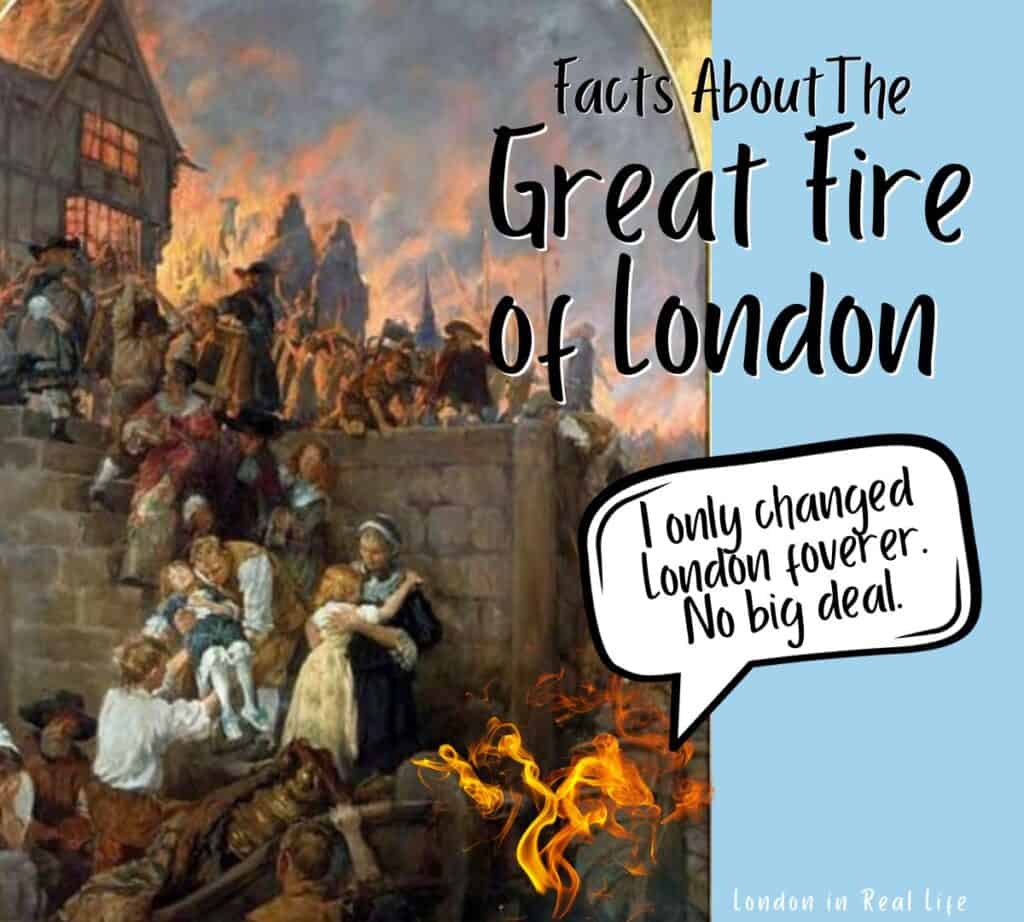
- The Great Fire of London started on September 2, 1666.
- It began in a bakery on Pudding Lane, owned by Thomas Farriner.
- The fire lasted for four days, finally extinguished on September 6.
- It destroyed a large part of the City of London, including 13,200 houses and 87 parish churches.
- St. Paul’s Cathedral was one of the most notable buildings destroyed.
- The fire spread rapidly due to the wooden-framed buildings and close-knit streets.
- Remarkably, only six verified deaths were recorded, although the actual number may have been higher.
- The fire stopped near the Temple Church in the west, near the Pudding Lane in the east, at Pye Corner in the north, and near the Tower of London in the south.
- Firefighting was primitive, relying on bucket chains, squirts, and firehooks to demolish buildings in the fire’s path.
- No fire brigade existed; the Lord Mayor and trained bands of the city led the firefighting efforts.
- The disaster led to the implementation of new building regulations, mandating the use of brick and stone. This changed the look of London forever.
- Sir Christopher Wren was commissioned to rebuild St. Paul’s Cathedral and numerous other churches after the fire, and became one of the most famous architects in London with his iconic buildings.
- The Monument, a 62-meter tall column, was erected near Pudding Lane to commemorate the fire. It’s exactly 62 meters from where the fire started.
- The fire significantly impacted London’s social and economic structure, leading to urban redevelopment.
- Maps of London before and after the fire show the extent of the destruction and subsequent changes in city planning.
- The fire led to the creation of insurance companies in London, including the famous Lloyds of London.
- Samuel Pepys, a famous diarist, provided a detailed first-hand account of the fire.
- Fire Hooks used to pull down houses to create firebreaks are now displayed in the Museum of London (currently closed until 2025).
- The fire played a crucial role in eradicating the Bubonic Plague by destroying the rat-infested slums, though more slums would inevitably pop up elsewhere.
- The rebuilding took over 50 years and transformed London into the city we know today, with very few wooden structures remaining. London is mostly made of brick and stone because of the fire.
Facts About the London Underground & Railways
Love all things London Underground? This transport system has a crazy cool history. Here’s some fun London facts about the Underground.

- The London Underground, also known as “the Tube,” is the oldest underground railway network in the world, opened in 1863.
- Aldgate Station, situated on top of a massive plague pit from the 17th century, is rumored to be haunted.
- The Underground’s deepest station is Hampstead, at 58.5 meters below ground level. Don’t take the stairs!
- During World War II, many Tube stations were used as bomb shelters.
- The Underground has its own species of mosquito, known as the ‘London Underground mosquito’, which evolved in the network.
- The American talk show host Jerry Springer was born at Highgate station during World War II while it was being used as a shelter.
- The total length of the London Underground network is 402 kilometers (250 miles).
- The shortest distance between two adjacent stations on the network is only 260 meters, between Leicester Square and Covent Garden.
- About half of the Underground actually runs above ground.
- The Tube’s famous map is not physically accurate – it’s an abstract representation designed by Harry Beck in 1933.
- The original carriages of the Metropolitan Line were nicknamed “padded cells” due to their distinctive interior.
- Ghostly sightings have been reported at many stations, including Farringdon and Covent Garden.
- The disused British Museum station was rumored to be haunted by the spirit of an Ancient Egyptian mummy.
- The Underground transported 1.3 billion passengers in the year before the COVID-19 pandemic.
- Each train travels an average of 114,500 miles (184,269 km) a year, equivalent to circling the Earth over four times.
- The phrase “Mind the Gap” originated on the London Underground and is now famous worldwide.
- The longest continuous tunnel, on the Northern Line, runs for 27.8 kilometers (17.3 miles) between East Finchley and Morden.
- King’s Cross St. Pancras station is the largest on the network, with 14 platforms and six lines.
- The distinctive smell of the Underground is a combination of brake dust, metal, and skin particles (eew).
- The escalators at Angel station are the longest in the system, with a length of 60 meters (197 feet).
- The first section of the Underground opened in 1863 between Paddington and Farringdon, using steam trains.
- The original Metropolitan Line is the world’s first underground railway.
- Electric trains replaced steam trains on the Underground in the early 20th century, improving air quality in the stations.
- The construction of the deep-level tunnels, known as “tube” tunnels, began in the 1890s.
- Many of the Underground’s stations were designed by architect Leslie Green, known for his distinctive red-tiled facades.
- The Piccadilly Line was extended in the 1930s, leading to the development of new suburban areas.
- During the Blitz of World War II, the Underground served as air-raid shelters, with some stations fitted with bunks.
- The Victoria Line, opened in 1968, was the world’s first automatic train service.
- The Jubilee Line, opened in 1979, was named to commemorate Queen Elizabeth II’s Silver Jubilee.
- The Waterloo & City Line, known as “The Drain,” is the shortest line, connecting Waterloo and Bank stations.
- The construction of the Elizabeth Line, formerly known as Crossrail, was one of Europe’s largest infrastructure projects. It led to the discovery of some pretty cool archeological finds!
- The deep-level tube lines were originally dug using the “Greathead Shield,” a precursor to modern tunnel-boring machines.
- The Underground helped transport thousands of children out of London during World War II’s Operation Pied Piper.
- St. Mary’s (Whitechapel Road) station, closed in 1938, was used as an air-raid shelter and command center during World War II.
- In 2003, the Underground was transferred from central government control to Transport for London.
- The disused Down Street station was used as a bunker by Winston Churchill during World War II.
- The Bakerloo Line is a contraction of “Baker Street” and “Waterloo,” reflecting the line’s original run.
- The first escalators on the Underground were introduced at Earl’s Court in 1911.
- Many “ghost” stations, like Aldwych, are no longer in use but can be seen in films and on special tours.
- The construction of the Victoria Line in the 1960s led to the discovery of a mammoth tusk near King’s Cross.
- London used to have a train just for dead bodies. You can still see remnants of the station for the Necropolis Railway today.
Weird Facts About London
My second favorite genre of London facts are the weird and wacky ones. Here’s some fun London facts that are just strange and bizarre!
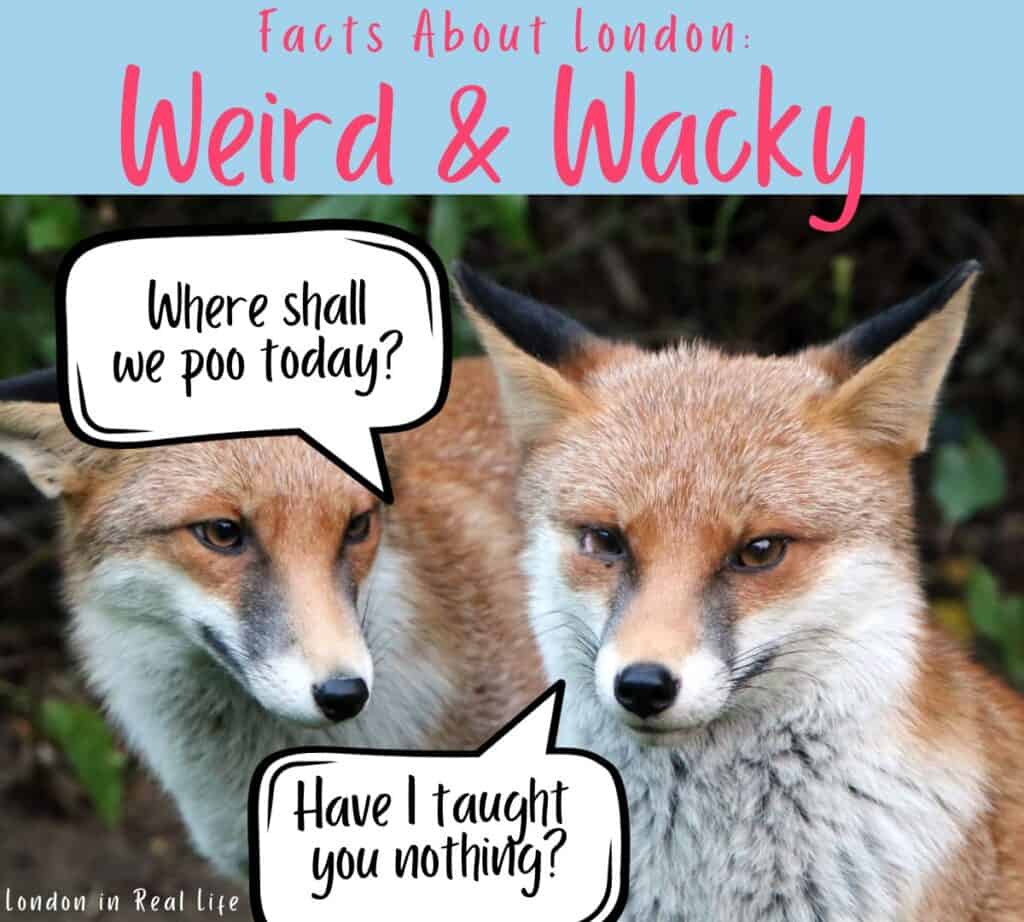
- Foxes flourish in London because they have no natural predators in the city.
- There’s a fake house at 23/24 Leinster Gardens, designed to hide the Underground’s Metropolitan Line. It’s probably still over 2 million quid.
- It’s illegal to fly kites in London.
- A pet cemetery exists in Hyde Park, dating back to the 1880s, as a resting place for Victorian-era pets.
- The reflection off the glass from the Walkie Talkie once melted a car.
- The London Underground could have been water-based; early plans proposed using flooded tunnels with boat traffic!
- They once tried to perfume the underground for a more pleasant travel experience. It just made people ill, so they stopped.
- There are tiny sculptures of noses on several buildings in Soho, placed there by artist Rick Buckley in 1997.
- If you’re pregnant, you’re allowed to publicly urinate in a policeman’s helmet in London. Seriously. Though I bet no one has actually tried this since the 18th century…hopefully?
- You can have coffee in an old Victorian toilet underground.
- London buses were not always red; before 1907, each route had its own color scheme.
- A parrot named Polly, which could imitate air raid sirens, died of fright during a bombing in World War II.
- The Tower of London had a polar bear in the 13th century, which fished in the Thames while tied to a rope.
- Cleopatra’s Needle on the Embankment has a time capsule buried beneath it with items like a map, a shilling, and some hairpins.
- The BT Tower was classified as an official secret until the 1990s, and its existence was officially denied.
- There’s a tiny prison cell in the base of the clock tower at Big Ben, historically used to detain unruly Members of Parliament.
- During a shortage in the 1950s, Harrods sold a live elephant named Gertie to a man who thought it would be a great pet for his kids. It was not.
- The Great Bed of Ware, now in the V&A Museum, is so large it can sleep 15 people and was a tourist attraction in its own right. It’s also supposedly haunted.
- The famous Sherlock Holmes address, 221B Baker Street, didn’t even exist when Arthur Conan Doyle wrote the books.
- The Millennium Bridge was nicknamed the “Wobbly Bridge” after pedestrians felt it swaying on its opening day. In high winds, it still wobbles.
- The statue of George Washington in Trafalgar Square stands on imported Virginian soil, as Washington vowed never to set foot on British soil.
- In 1252, Henry III received a real African elephant as a gift; it was housed in the Tower of London.
- London’s smallest statue, a mouse sculpture, can be found on Philpot Lane and commemorates two builders who died during its construction.
- The Piccadilly Circus’ Eros statue is actually of Eros’s brother, Anteros, the god of requited love.
- The Peter Pan statue in Kensington Gardens magically appeared overnight in 1912 as a surprise to Londoners.
- There’s a traffic light tree in Canary Wharf with 75 sets of lights, created as a piece of public art.
- Karl Marx’s tomb in Highgate Cemetery has been bombed twice.
- London’s narrowest house, at 5.5 feet wide, is located in Shepherd’s Bush.
- London once had its own version of the Eiffel Tower, called the Watkin’s Tower, but it was never completed.
- The original London Bridge is now in Arizona; it was purchased and relocated in the 1960s.
- There’s an underground farm in a World War II bomb shelter beneath Clapham, growing herbs and microgreens.
- The Beatles played their last ever gig on a rooftop in Savile Row, London.
- London has a “lighthouse” in King’s Cross, which is actually a decorative tower with no maritime history.
- There’s a cash machine that offers instructions in Latin at the University College London.
- A Nazi dog, Giro, is buried in London; he was the pet of the German Ambassador in the 1930s.
- The Seven Noses of Soho are said to grant fortune to those who find all of them.
- The Viaduct Tavern in Newgate Street has old cells beneath it, remnants of the former prison across the street.
- You can drink in a pub, but you’re not allowed to be drunk in a pub.
- Beneath the streets of Westminster, there are several miles of pneumatic tube mail system, once used to deliver messages.
- The Abbey Road crosswalk isn’t actually in the same place it used to be when the Beatles shot their iconic album cover. You can pretend it is, though.
- The statue of Amy Winehouse in Camden Market is the only statue of a woman in London that’s not a royal or fictional character. C’mon, London.
- London has an annual competition for turning on the gas lamp lights in Pall Mall, one of the last places with manually operated gas lights.
- There’s a Roman bath hidden underneath a 1960s office building on Strand Lane.
- The “Hammersmith Ghost Murder Case” set legal precedent for killing under mistaken belief. In this case, a murder occurred because a man thought he was shooting a ghost. Seriously.
- And lastly, you can eat all the salmon you want. But you cannot handle it “suspiciously,” or you could face jail time.
Weird Things About Living in London That Don’t Make Sense
If you’ve made it this far down this massive London facts list, you get a reward. Here are the things about living in London that – for me – just don’t make sense.
- A fox will always choose to poo on your front steps. And always exactly where you will place your foot walking out the door in the morning.
- No one knows how to pick up their dog poo.
- Why are there random chicken bones everywhere, but not many fried chicken shops? Where is everyone getting the chicken???
- All the swans in London belong to the King. Seriously.
- Our washing machines are in the kitchen.
- Oh, and we don’t have dryers.
- You have to rent a shopping trolley for £1. If you don’t have a pound coin, no trolley for you!
- Nuclear waste passes by us everyday on trains. Because nothing could go wrong with that, right?
- You can drink alcohol literally everywhere except on the tube and buses.
- If your friends live in a different borough you’ll never see them.
- People have very strong opinions about their grocery store and will fight to the death about which one is best.
- People have very strong opinions about their favorite tube lines and will fight to the death about which one is best.
- Once you move to London you will immediately get irritated with meandering tourists. It’s the law.
- We still don’t have a mobile signal underground. Or reliable wifi. It’s 2024.
- We willingly pay 90% of our salary to our landlord but get very irritated with the price of Pringles.
- You can get on a train at one and be in another country across the entire English Channel by three o’clock. But we still don’t have 5G underground.
London Facts: Final Thoughts
Did I miss your favorite London fact? Email me at jen (at) London in Real Life (dot) com.
More on Visiting London:
The Best Navigation App for London to Download Now
Super Simple London Neighborhood Guide: Where’s Best for You?
Where Can I Charge my Phone in London? Local’s Ultimate Guide (2024)
19 Epic Good Omens London Locations for the Ineffable Explorer
Super Simple London Neighborhood Guide: Where’s Best for You?
Ultimate Guide: 49 Brilliant London Apps Everyone Should Know
The Ultimate Taylor Swift Guide to London
Top 5 Best and Worst Times to Visit London
37 Weird & Wonderful Things London is Famous For: See or Skip?
Help! Harry Potter Studio Tickets are Sold Out. What Can I Do?
Masterlist: 201+ London Instagram Captions for the Perfect Post


